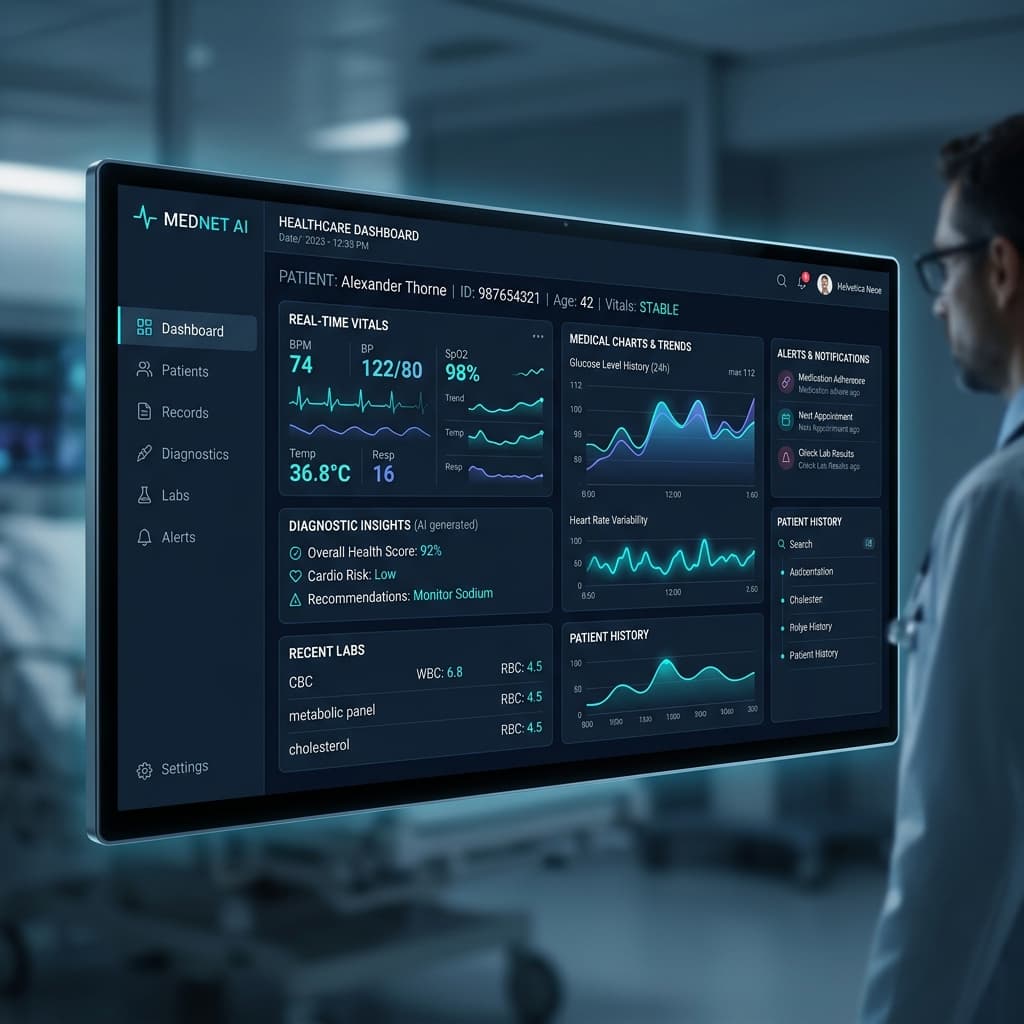
Key Takeaways
- ✓Establish secure, FHIR-compliant vital telemetry data pipelines
- ✓Avoid warning fatigue by prioritizing clinical dashboard alerts
- ✓Integrate medical-grade home monitoring devices directly into EHRs
Remote patient monitoring enables constant care for patients with hypertension, diabetes, or cardiovascular diseases. By feeding telemetry data directly from smart blood pressure monitors, ECG wearables, and glucose sensors to custom EHR dashboards, doctors can intervene before critical incidents occur.
RPM Infrastructure
Connecting diverse consumer and medical-grade IoT devices requires a structured telemetry gateway. Devices push raw data to a secure mobile app endpoint, which aggregates records and formats them as HL7-compliant telemetry packets.
Bluetooth Vital Records API
Below is a TypeScript gateway snippet demonstrating vital signs ingestion, payload validation, and triggering database threshold warnings if patient vitals cross safe ranges:
interface VitalTelemetryPayload {
  patientId: string;
  deviceType: 'GLUCOMETER' | 'BLOOD_PRESSURE' | 'ECG';
  readingValue: number;
  unit: string;
  measuredAt: string;
}

export async function ingestVitalReading(payload: VitalTelemetryPayload): Promise<{ status: string; alertTriggered: boolean }> {
  // Validate measurements
  if (payload.readingValue <= 0) {
    throw new Error("Invalid medical telemetry reading.");
  }

  let alertTriggered = false;
  // Example threshold check for blood glucose (mg/dL)
  if (payload.deviceType === 'GLUCOMETER' && (payload.readingValue > 250 || payload.readingValue < 70)) {
    alertTriggered = true;
    await triggerClinicalAlert(payload.patientId, `Critical glucose reading: ${payload.readingValue} ${payload.unit}`);
  }

  await saveToVitalsDatabase(payload);
  return { status: "SUCCESS", alertTriggered };
}
Structuring Doctor Alerting
To avoid warning fatigue, dashboards must prioritize vital alerts. Doctors should see telemetry data arranged on a visual timeline, highlighting deviations from standard baselines, while clinical staff manages low-risk alerts.
Written by Dr. Alex Patel
Director of Clinical TelemetryDr. Alex Patel specializes in medical hardware systems, remote telemetry analysis, and API gateways connecting medical devices directly to custom EHR portals.
Connect on LinkedInAI-Generated Questions & Answers
Common conversational queries evaluated by our natural language models concerning deployment guidelines.